The Role of ATM Machine Providers in the Future of Financial Services
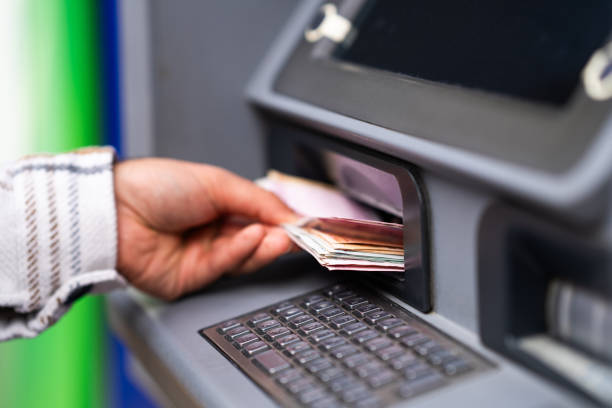
Digital wallets, instant payments, and mobile banking continue to change how people manage money, but ATMs remain an important part of the financial services ecosystem. The role of ATM machine providers is changing along with the industry. Providers are no longer focused only on supplying cash-dispensing machines. They increasingly support smarter self-service technology, stronger security, remote monitoring, cash management, accessibility, and integration with broader banking systems.
The latest Federal Reserve Payments Study shows that ATM cash withdrawals in the United States continued to decline in both number and value in 2024, while overall noncash payments reached 236.6 billion transactions. That shift does not make ATMs irrelevant. Instead, it creates pressure for ATM operators and providers to make each machine more useful, reliable, secure, and cost-effective.
ATMs Are Becoming More Than Cash Dispensers
The traditional ATM primarily handled cash withdrawals, balance inquiries, and a few basic transactions. Today’s self-service machines can support a much broader range of functions depending on the hardware, software, financial institution, and processing network involved.
Modern ATM capabilities can include:
- Cash and check deposits
- Cardless cash withdrawals
- Funds transfers
- Bill payments
- Multilingual interfaces
- Biometric authentication
- Digital customer onboarding
- Contactless transaction options
- Remote diagnostics and monitoring
Industry research has found that banks increasingly view ATMs as platforms for diverse self-service transactions and as an important physical presence in local communities.
For ATM machine providers, this means the focus is shifting from simply installing equipment to providing technology and services that support a complete self-service experience.
Improving Access to Cash and Financial Services
The growth of digital payments has not eliminated the need for physical cash. Federal Reserve data published in 2026 found that 83% of U.S. adults had used cash for a payment during the previous month. Cash use varies across demographics and circumstances, but it continues to serve consumers who prefer it or need it.
This makes ATM availability particularly important for businesses and communities where access to bank branches is limited.
An ATM placed at a convenient retail location can give customers access to cash outside traditional banking hours. For businesses, providing on-site cash access can also improve convenience and potentially increase customer visits.
ATM providers can support this access through strategic placement, dependable processing, regular maintenance, cash management, and responsive service.
Security Is Becoming a Bigger Part of ATM Management
As ATM technology becomes more connected, security has become a central consideration for operators and providers.
Modern ATM security can involve encrypted transaction communications, secure software, anti-skimming technologies, physical security measures, remote monitoring, authentication controls, and software updates. Providers also need to monitor machines for unusual activity and respond quickly when technical or security problems occur.
AI is also beginning to influence ATM operations. Industry research identifies fraud detection, predictive maintenance, cash management, and improved customer experiences as potential applications for AI in ATM networks. Adoption is developing gradually rather than occurring all at once, making responsible implementation and reliable underlying systems especially important.
For businesses deploying ATMs, choosing a provider with strong monitoring and maintenance capabilities can be just as important as selecting the physical machine itself.
Accessibility Remains Essential
ATM technology also has to serve people with different physical and sensory needs. In the United States, the ADA Standards for Accessible Design include specific requirements for ATMs, including accessibility of controls, privacy, and speech output.
Accessibility should therefore be considered during ATM selection and installation rather than treated as an afterthought. Providers can help businesses evaluate machine placement, interface features, and physical access requirements so customers can use the equipment independently.
For locations with multiple machines or different ATM configurations, providers should also understand which accessibility requirements apply to the installation.
Remote Monitoring and Predictive Maintenance
One of the biggest changes in ATM management is the ability to monitor machines remotely.
Instead of waiting for a customer or employee to report a problem, connected ATM systems can provide information about machine status, transaction activity, cash levels, hardware faults, and other operational conditions.
This creates opportunities for more proactive maintenance. Industry research has also highlighted AI-driven cash forecasting as a way to predict ATM cash requirements and improve replenishment decisions.
For ATM operators, better monitoring can mean:
- Faster response to technical problems
- Fewer unnecessary service visits
- Better cash replenishment planning
- Reduced downtime
- Improved customer experience
- More efficient network management
This is one reason the value of an ATM provider increasingly extends beyond the initial sale or installation.
The Rise of ATM-as-a-Service
Another important development is the growth of managed ATM services, sometimes referred to as ATM-as-a-Service.
Instead of handling every aspect of an ATM network internally, financial institutions and businesses can outsource some combination of equipment management, software, monitoring, maintenance, processing, and cash-related services.
ATMIA reported that 15% of banks surveyed for its 2024/25 ATM software trends research had outsourced all ATM-related responsibilities to a third party.
For businesses that do not want to manage ATM technology themselves, working with an experienced provider can simplify day-to-day operations while providing access to specialized support.
ATMs Will Complement Digital Banking
The future of financial services is unlikely to be entirely digital or entirely cash-based. Instead, consumers will continue using a mix of payment methods depending on the situation.
The Federal Reserve’s latest payments data shows the continued expansion of cards and other noncash payment methods, while cash remains part of consumers’ financial lives.
That makes the ATM increasingly important as a connection point between physical and digital financial services.
A customer may use a mobile banking app to locate an ATM, authenticate a transaction digitally, withdraw cash, and then return to digital payments for other purchases. As financial technology develops, ATM networks can become part of this connected customer journey rather than operating separately from it.
What the Future Holds for ATM Machine Providers
The next generation of ATM services will likely focus on smarter software, stronger security, better network management, and greater integration with other financial technologies.
AI-assisted monitoring, predictive maintenance, improved cash forecasting, cardless transactions, biometric authentication, and expanded self-service capabilities are already influencing ATM development. Industry organizations are also tracking broader concepts such as smarter ATM networks, software-driven upgrades, managed services, and shared infrastructure.
However, not every emerging technology will become standard immediately. The most successful ATM providers will likely be those that can balance innovation with reliability, security, accessibility, compliance, and practical operating costs.
Choose an ATM Machine Provider That Can Support Your Business
The future of ATMs is not simply about installing newer machines. It is about creating reliable access to financial services while adapting to changing consumer expectations.
Whether you operate a retail store, restaurant, entertainment venue, hospitality business, or another commercial location, the right ATM machine provider can help with equipment selection, installation, processing, monitoring, maintenance, and ongoing support.
At Atlantic Processing, we help businesses access dependable ATM solutions designed around their operational needs. As ATM technology continues to evolve, having an experienced provider behind your machine can make it easier to keep your customers connected to the financial services they use every day.
Contact Atlantic Processing to learn more about ATM solutions for your business and how modern ATM technology can support your customers and operations.
This post was written by a professional at Atlantic Processing. Atlantic Processing, headquartered in the Tampa Bay area, is a leading national ATM processing and service provider. We specialize in comprehensive atm placement services, processing, sales, and service, catering to retail and financial institutions across the United States. Our commitment to excellence and customer satisfaction ensures that our clients receive top-tier service and support. Whether you need a new ATM installation, efficient processing solutions, or reliable maintenance, Atlantic Processing is your trusted partner in keeping your ATM operations running smoothly and efficiently.