Precision Without Pressure: A Complete Beginner’s Guide to Chemical Milling
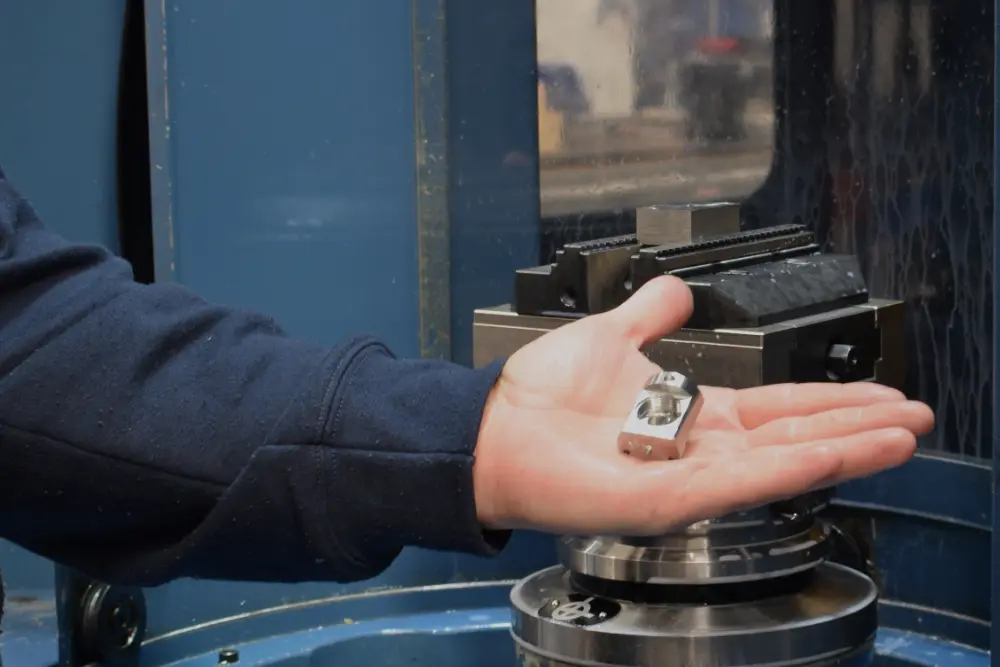
In the world of advanced manufacturing, there are many ways to shape metal. Most people are familiar with traditional machining, where a physical tool like a drill or a saw carves away material. However, some of the most intricate components used in aerospace, medical devices, and electronics are created using a process that involves no physical contact at all. This process is known as chemical milling. Also referred to as industrial etching or chemical machining, it is a subtractive manufacturing technique that uses controlled chemical reactions to remove metal and create complex shapes with extreme precision.
Key Advantages Over Traditional Machining
One of the primary reasons engineers choose chemical milling is the ability to work with incredibly thin materials. In industries like aerospace, weight is a critical factor. Chemical milling allows for the “pocketing” of large metal sheets, where the thickness is reduced in specific areas to save weight while maintaining structural integrity. Because there is no mechanical stress or heat-induced distortion involved in the process, the metal maintains its original physical properties, which is vital for safety-critical components.
Furthermore, chemical milling excels at creating complex geometries that would be nearly impossible for a CNC machine to reach. Since the chemical bath surrounds the entire part, it can remove material from curved surfaces, internal cavities, and intricate patterns all at the same time. This simultaneous removal makes the process highly efficient for large batches of parts. Additionally, the process does not leave behind “burrs” or rough edges, which significantly reduces the time and cost associated with finishing and polishing the final product.
Common Materials and Industrial Applications
While many metals can be chemically milled, the most common materials used in this process include aluminum, titanium, stainless steel, and various nickel alloys. Each of these metals requires a specific chemical “recipe” for the etchant to ensure the reaction is stable and the finish is smooth. For example, aluminum is frequently milled for aircraft wing skins and fuselage panels, while titanium is often used for high-strength components in medical implants and high-performance engines.
Beyond aerospace, the electronics industry relies heavily on a variation of this process to create printed circuit boards and lead frames. The ability to create microscopic paths for electricity to flow is a testament to the high resolution that chemical etching can achieve. In the decorative arts, the process is used to create intricate metal grilles, jewelry, and high-end architectural panels, proving that this industrial powerhouse also has a place in aesthetic design.
Conclusion
Chemical milling is a fascinating blend of chemistry and engineering that allows for the creation of components that are lighter, stronger, and more complex than those made through traditional means. By harnessing the power of controlled chemical reactions, manufacturers can achieve a level of precision that defies the limitations of physical tools. As technology continues to demand smaller and more efficient parts, the role of chemical milling will only grow in importance. It remains a cornerstone of modern manufacturing, proving that sometimes the best way to shape the future is to let chemistry do the heavy lifting.