
White Oak Flooring in Toronto: How to Read Grain, Grade and Finish Before You Choose
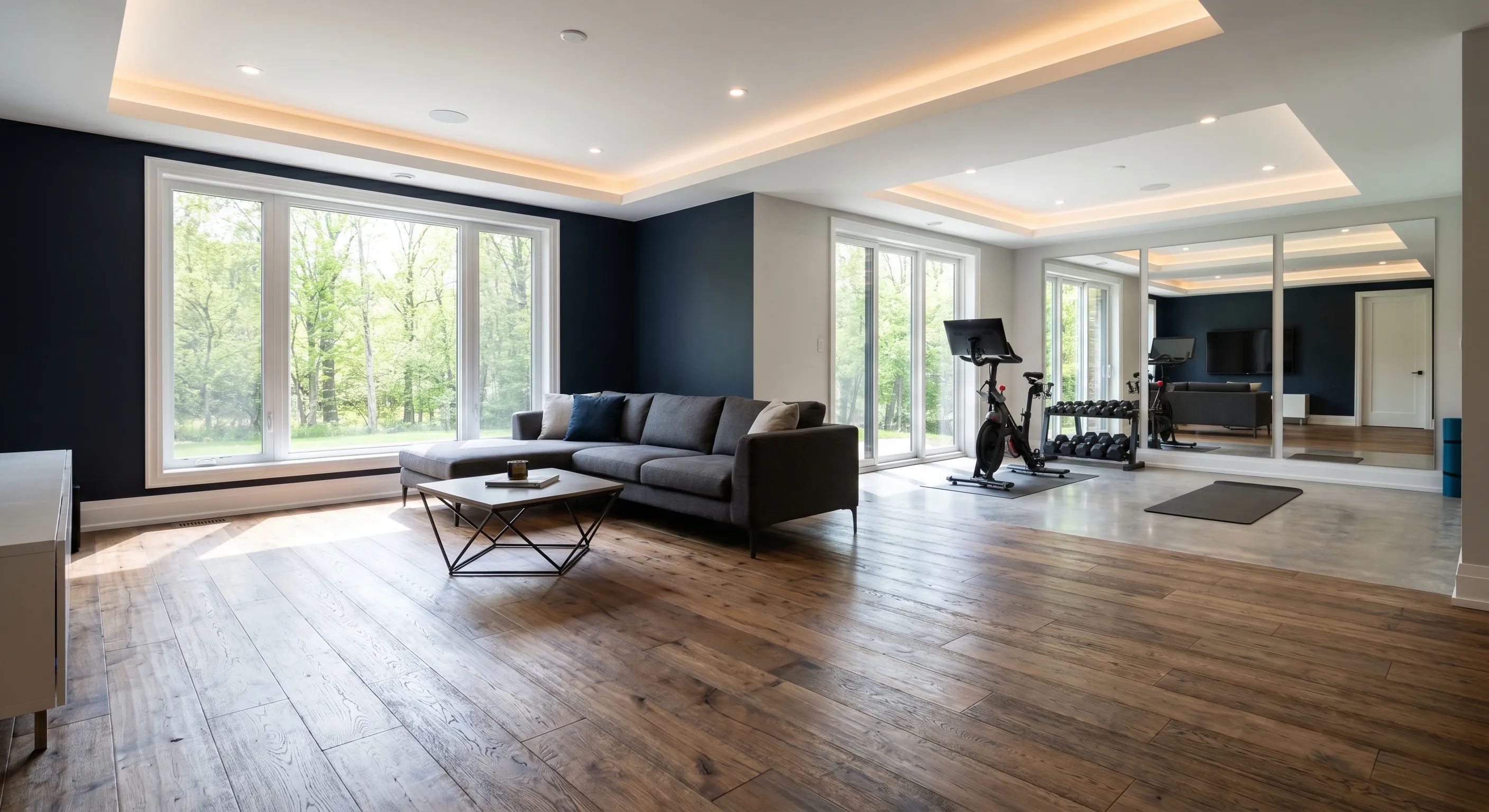
White oak has become the default choice for a great many Toronto renovations, from narrow Leslieville semis to large family homes in North Toronto and new condominium suites downtown. Designers like it because it sits comfortably between pale and warm, takes colour well and wears hard enough for a busy kitchen. The difficulty is that the words white oak on a sample board can describe very different floors once they are laid across a whole level. The way the log was sawn, the grade chosen at the mill and the finish applied at the end change the look far more than the species name suggests.
Late fall is a good time to make the decision, because November light in Toronto is low, short and unforgiving. A board that looks right on a bright July afternoon can read grey or yellow under winter daylight and warm evening bulbs. What follows is a practical way to read a white oak sample, so the floor that arrives is the floor that was imagined in the showroom.
How the Saw Cut Shapes White Oak Grain
Every white oak board starts as a log, and the angle at which it is cut decides the pattern on the surface. Plain-sawn boards, cut straight through the log, show the broad arches and loops often called cathedrals. They are the most common and the most expressive, and they give a floor a relaxed, natural movement. Rift-sawn boards are cut at a steep angle to the growth rings, which produces tight, straight, parallel lines with very little figure. Many contemporary Toronto interiors use rift or mostly rift oak because it reads calmly across a large open space.
Quarter-sawn boards are cut roughly at right angles to the growth rings and reveal the medullary rays, the silvery flecks and ribbons that are characteristic of oak. Ray fleck can look elegant in a period home with original mouldings, and busy in a minimal one. Many engineered floors blend cuts, so it is worth asking whether a product is plain-sawn, rift and quartered, or a mix, and whether that mix is consistent from box to box. A single small sample rarely shows this; a set of full-length boards laid side by side does.
Reading the Grade on a White Oak Sample
Grade describes how much natural character the mill allows into each board. The names vary between producers, but the idea is consistent. The cleanest grades, often called prime, select or clear, limit knots and colour variation, so the floor looks uniform and quiet. Natural or character grades allow small knots, some sapwood and more variation in tone. Rustic grades permit larger knots, filled splits and strong colour changes from one board to the next.
None of these is better in itself. Clean grades suit formal rooms and pale finishes, where every mark would draw the eye, while character grades disguise everyday wear and bring warmth to large open plans. The important question is how the grade looks at scale. A rustic sample that seems charming in the hand can feel busy across a long main floor, and a select board that looks plain on its own can be striking over a whole level. Ask how knots are filled, whether the filler is tinted to suit the finish, and whether the grade standard is written down so that a later order will match.
Finishes That Change How White Oak Looks in Toronto Light
Raw white oak is a soft straw colour, but very few floors are left that way. Natural oils and hardwax oils soak into the wood and leave a matte, slightly textured surface that feels like timber underfoot. They are easy to spot-repair, which suits family homes, though they ask for periodic maintenance coats. Factory lacquers and UV-cured finishes form a tougher film on the surface and need less routine care, but a deep scratch usually means a larger repair. Sheen matters too: a matte or extra-matte finish hides fine scratches and reads more like natural wood than a satin or gloss surface.
Colour treatments go further. Some finishes carry a little white pigment to stop pale oak from drifting toward yellow. Smoked or fumed oak is treated so that the natural tannins in the wood darken, giving tones from soft brown to near black that run into the fibres rather than sitting on top. Because tannin content varies from board to board, fumed floors show natural variation, which is part of their appeal. Wire brushing removes some of the softer wood between the grain lines and leaves a tactile surface that also disguises daily wear.
Judging White Oak Samples in a Toronto Winter
The most common regret with white oak is tone, and most of those decisions are made under the wrong light. Showrooms are lit to show product well, and photographs online are colour-corrected. The light that matters is the light in the actual house. In Toronto, south-facing rooms get strong, low winter sun that warms the wood, while north-facing rooms and lower levels get cool, flat light that can make grey or white-washed oak look cold or even slightly green. Warm-white bulbs push oak toward honey in the evening, and cooler bulbs push it toward grey.
The practical answer is to borrow full-size boards, not small chips, and lay several on the floor of each main room. Look at them in the morning, in the middle of the afternoon and after dark, next to the cabinetry, stair treads and any stone that will stay. If two tones are close, choose in the room with the least light, because a floor that works there will usually work everywhere else. Specialist showrooms dealing in white oak flooring in Toronto will generally lend boards for this, and it is worth asking for boards from current stock rather than an older display set.
Why Engineered White Oak Suits Toronto Homes
Most high-end white oak floors installed in the city today are engineered: a layer of sawn or sliced oak bonded to a stable multi-ply or layered core. The core resists the seasonal swelling and shrinking caused by humid Toronto summers and dry, heated winters, which is what makes wide planks and long boards realistic in houses with forced-air heating and in condominiums built on concrete slabs. When comparing products, the thickness of the oak wear layer is the detail that matters most, because it decides whether the floor can be sanded and refinished later in its life.
Engineered construction also influences how the grain reads. A thick sawn top layer looks and wears like solid timber, while a thin rotary-peeled veneer can show a wide, plywood-like figure that gives it away. Ask how the top layer is cut, what the core is made of and how the boards were dried, and ask to see an offcut showing the cross-section. Those details are hidden once the floor is installed, but they decide how it behaves through decades of Toronto winters.
Living With a White Oak Floor Over Time
White oak changes gently with age. Daylight slowly warms and deepens the colour, and the shift is often most visible in the first year. Rugs placed early can leave paler patches underneath, so it helps to move them occasionally while the floor settles into its long-term tone. Felt pads under furniture, a good mat at the entrance and a damp rather than wet cleaning routine will keep the surface looking right. Salt and grit tracked in from Toronto sidewalks are behind many of the dull, scratched patches that appear near front doors by spring.
Before ordering, ask for the exact maintenance products the finish is designed for, because the wrong cleaner can leave residue on an oiled floor or haze on a lacquered one. It is also sensible to keep a box or two of spare boards from the same production batch in a dry part of the house. If a board is ever damaged by a dropped pot or a leak, a replacement from the original run will blend far better than one ordered years later. Chosen with care, white oak is one of the few floors that looks better in its tenth winter than in its first.

