Manure Management Done Right: Where Sustainability And ROI Actually Meet
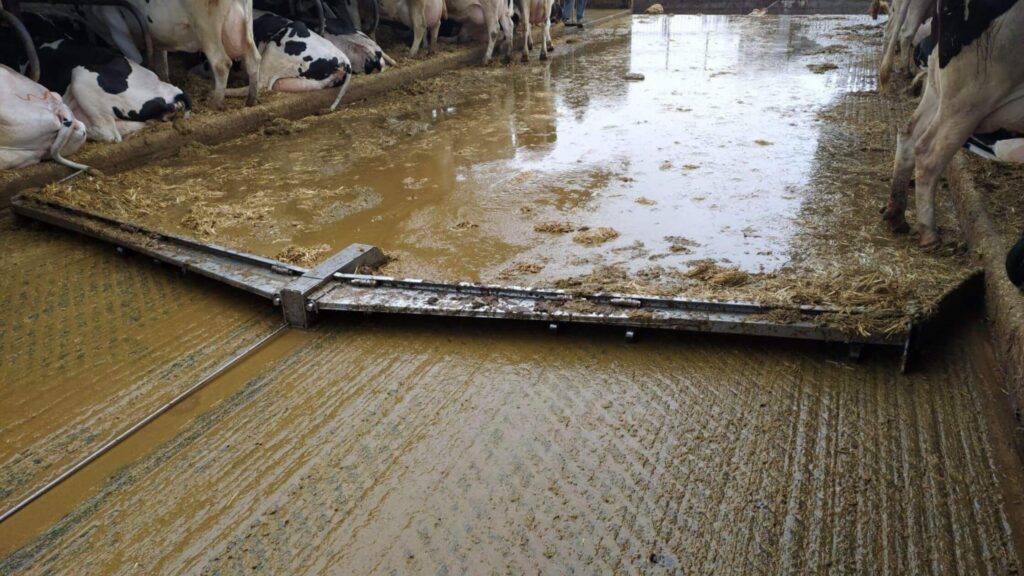
Manure used to be something we tolerated. A byproduct of having livestock, a problem to be dealt with in spring and fall, sometimes a regulatory headache. But the conversation has shifted a lot in the last decade. Between high fertilizer prices, increased focus on soil health, and tighter rules around nutrient management, manure is finally being recognized for what it really is: a valuable input that just happens to be on the wrong end of the animal.
Let me put some numbers on this. With nitrogen prices where they’ve been, a 1,500 pound finished steer produces manure containing roughly $150-$250 worth of nutrients depending on rations and how the manure is managed. Scale that across a feedlot and you’re talking about real money walking out the gate every day. The question is how much of that you can capture and use effectively, versus how much you lose to volatilization, runoff, or simply not measuring what you have.
Storage is where a lot of the value is won or lost. Open piles in uncovered storage lose a huge amount of nitrogen to the air, especially in warm conditions. Roofed storage, lagoons with proper management, or solid separation systems all reduce losses significantly. The capital cost looks scary upfront but the payback period has shortened a lot as fertilizer prices have risen. A producer who runs the numbers honestly is often surprised at how quickly improvements pay back.
Application equipment matters as much as storage. Broadcasting manure on the surface and waiting a day before incorporation is the old way, and it loses tons of nitrogen. Direct injection is way better — the nitrogen stays in the soil instead of evaporating. Drag hose systems, injection toolbars, low disturbance applicators — these are the equipment categories that have advanced a lot in the last fifteen years and they actually deliver measurable benefits.
Liquid versus solid handling is the big architectural choice. Most dairies and large hog operations are liquid systems. Most cow-calf and small feeders are solid systems. There’s tradeoffs both ways. Liquid systems are more capital intensive but they’re also easier to apply with precision. Solid systems are simpler but harder to apply uniformly and harder to inject. Match the system to your operation but don’t assume one is automatically better than the other.
Testing your manure is non-negotiable if you actually want to manage it. Without nutrient analysis, you’re guessing. And the variability between operations, between batches, between seasons is significant. A composite sample from your actual storage, sent to a lab, costs maybe $50-$100 and tells you exactly what you have to work with. Then you can build application rates that actually replace fertilizer instead of stacking it.
On equipment sourcing, the
agri-business directory over at FarmPages has a dedicated section for manure and waste management equipment. You’ll find spreaders, slurry tanks, injection equipment, separation systems, the whole range. It’s worth browsing even if you’re not actively shopping — sometimes you find solutions to problems you didn’t know had a solution. The North American manufacturer scene in this space is pretty strong.
Regulations are tightening in most jurisdictions, and you can either get ahead of that or be reactive. Most provinces and states have nutrient management plans, setback requirements, application timing rules, and record keeping mandates. The producers who are proactive about this find it manageable. The producers who try to ignore it usually get a wake up call eventually, often after a complaint or a water test that doesn’t go the right direction.
Composting is something more operations are looking at, especially for solid manure systems. A well managed compost pile transforms raw manure into a much more stable product that’s easier to apply, less likely to volatilize nitrogen, and often acceptable to crop neighbours who wouldn’t want raw manure on adjacent fields. It does require management — turning, monitoring temperatures, watching moisture — but the end product is significantly more valuable.
Don’t ignore the soil health side of manure. Beyond the nutrient value, manure brings organic matter, microbial diversity, and structural benefits that synthetic fertilizer doesn’t. Soils that have received regular manure applications over years show measurable improvements in water holding capacity, structure, and crop resilience. This isn’t woo-woo, it shows up on soil tests over time.
On record keeping, just do it. Whether it’s a notebook, a spreadsheet, or one of the farm management apps, write down: when you spread, where you spread, what the application rate was, what the field conditions were. This protects you legally, helps you learn what works, and gives you data to make better decisions over time. The hour a year you spend on this is well invested.
Manure management has shifted from a chore to a real opportunity over the last decade. The producers who treat it strategically — investing in storage, applying it precisely, testing what they have — are capturing meaningful value while also doing better by their land. It’s one of those areas where doing it well happens to align with doing it right, which doesn’t always happen in farming.