Erik Hosler on How Free-Electron Lasers Are Shaping the Future of EUV Lithography
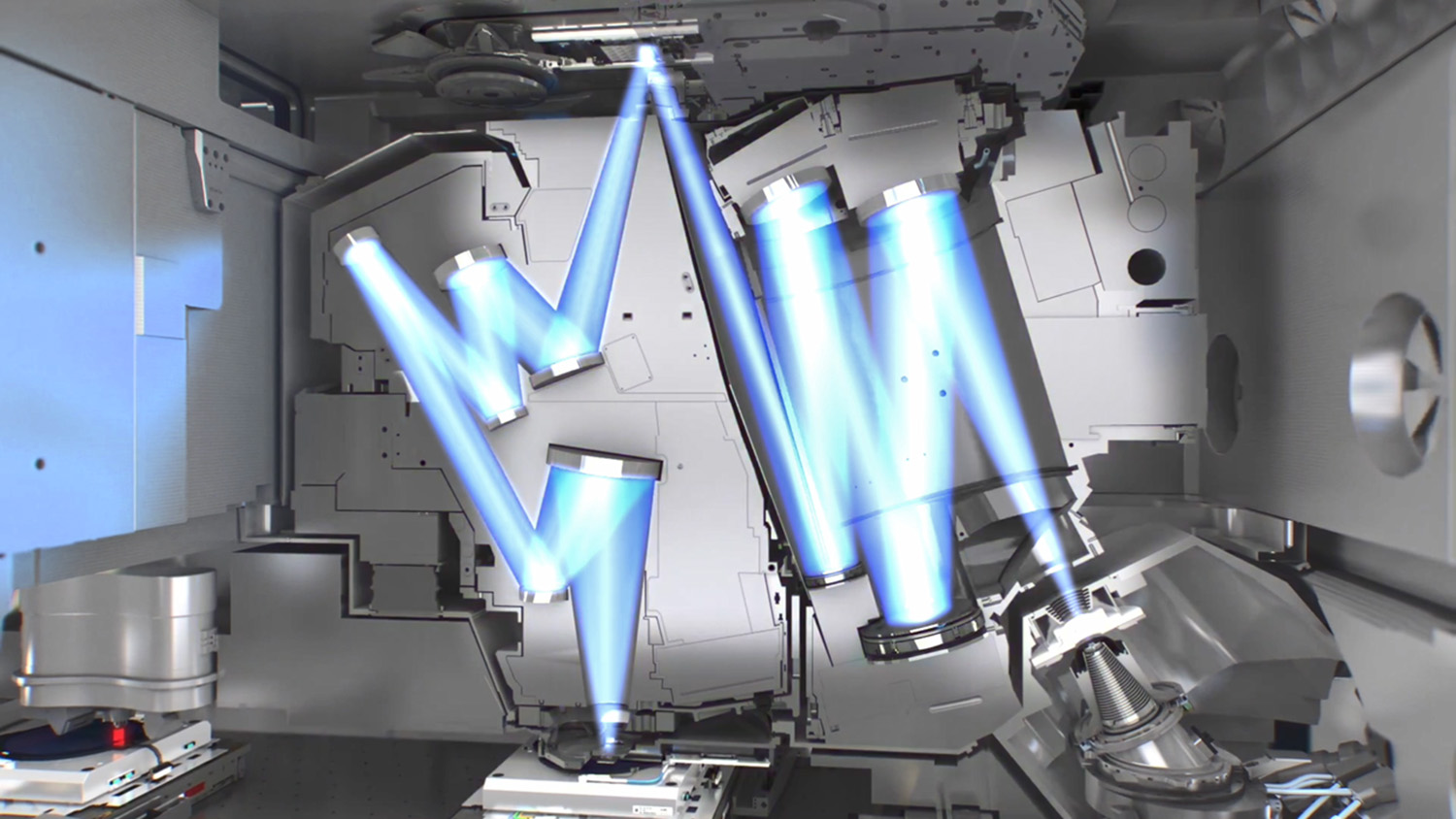
For decades, the semiconductor industry has relied on shrinking transistor dimensions to sustain progress under Moore’s Law. That steady reduction in feature sizes has demanded increasingly powerful lithography tools, with Extreme Ultraviolet (EUV) lithography at the center of advanced node production. Yet even as Laser-Produced Plasma (LPP) sources have enabled the first waves of EUV adoption, their limitations are becoming more apparent. Issues such as droplet generator reliability, high power requirements, and dose stability challenge their ability to keep pace with manufacturing needs. Erik Hosler, known for his insights into semiconductor strategy, highlights Free-Electron Lasers (FELs) as a potential leap forward. His framing presents FELs not as speculative projects, but as practical solutions that could reshape EUV’s trajectory.
The move from LPP to FEL sources is not simply about replacing one technology with another. It reflects a shift in how chipmakers evaluate availability, cost, and throughput in an era where downtime can translate directly into billions in lost productivity. FELs promise near-continuous operation, with redundancy and scalability built into their design, making them attractive for advanced production. This transition, however, is layered with technical and strategic complexities. As we explore these, the discussion highlights both the hurdles LPP continues to face and the growing case for FELs in semiconductor manufacturing.
The Limitations of LPP Sources in Advanced Manufacturing
LPP light sources were the first to make EUV lithography commercially viable, but they remain constrained by fundamental challenges. Chief among these is availability, which includes sustaining near-continuous output, and is difficult when core components such as droplet generators are prone to failure. Each interruption, even if brief, introduces costly downtime that scales poorly in high-volume semiconductor fabs. Power scalability has also been a bottleneck, with systems demanding immense laser energy to reach production-grade throughput.
Stability compounds the issue. LPP sources struggle to maintain dose precision within the narrow tolerance, often less than 0.2% variance, which advanced nodes require. Variations at this level can translate into line-edge roughness and patterning inconsistencies, directly undermining device yields. Add to this the complexity of managing debris and mirror contamination from the plasma itself, and the path forward with LPP appears increasingly limited. These shortcomings have set the stage for alternative solutions, with FELs emerging as the most promising candidate.
Why Free-Electron Lasers Are Gaining Traction
FELs offer a fundamentally different approach to generating EUV light. Unlike LPP systems that rely on tin droplet targets, FELs accelerate electrons through a magnetic structure to produce high-power, tunable radiation. This design sidesteps the reliability issues tied to droplet generation and enables far greater control over beam output. For fabs where uptime is paramount, the promise of continuous operation with built-in redundancy positions FELs as a more sustainable option.
Another advantage lies in scalability. FEL systems can be engineered to deliver the extreme power levels required for next-generation nodes without the escalating inefficiencies seen in LPP sources. Their stability, both in dose and coherence, provides a path toward reducing variability at the wafer level. While still complex to implement, FELs represent a leap forward in aligning source technology with the semiconductor industry’s demand for throughput, precision, and long-term cost efficiency.
Key Technical Requirements for FEL Deployment
Adopting FELs in semiconductor manufacturing is not without challenges. To succeed, these systems must demonstrate near-100% availability, a standard required by fabs that operate continuously and cannot afford extended downtime. Redundancy in critical subsystems from electron sources to beamline optics will be vital to ensure resilience. In addition, maintaining dose stability within fractions of a percent is essential for reliable pattern transfer at advanced nodes.
Another crucial factor is managing beam quality. FELs produce highly coherent radiation, which, while powerful, must be carefully controlled to avoid unwanted harmonic effects. The distribution of the beam through mirrors and onto wafers must balance power delivery with precision, requiring advances in optics and system integration. These technical demands highlight why FELs are both promising and difficult to implement because they push beyond the limits of LPP, but doing so requires rethinking facility design and operational protocols.
Strategic Outlook and Industry Perspectives
The discussion around FELs is more than theoretical. Industry conversations as early as 2018–2019 framed FEL insertion into advanced manufacturing as a near-term consideration, not a distant possibility. The momentum reflects both the limits of LPP and the readiness of stakeholders to explore alternatives that can sustain Moore’s Law.
Erik Hosler explains, “Finally, the solution to keeping Moore’s Law going may entail incorporating photonics, MEMS, and other new technologies into the toolkit.” His perspective underscores that FELs cannot solve the challenge alone. Rather, they represent one of several technologies that must work in concert to keep semiconductor scaling alive. In this sense, FELs are not just an upgrade in light-source technology, but part of a broader innovation ecosystem.
By positioning FELs alongside advances in photonics, MEMS, and quantum-oriented manufacturing, the industry acknowledges that no single breakthrough will carry Moore’s Law forward. The solution will be cumulative, layered technologies that enable continued scaling without sacrificing cost or manufacturability. FELs stand out because they directly address power and availability, the two metrics most limiting to EUV today.
The Next Chapter in EUV Lithography
The trajectory of EUV lithography is inseparable from the performance of its light sources. LPP enabled the first generation of EUV manufacturing but now faces clear limits in scalability, stability, and cost. FELs, though complex, bring fresh potential by offering continuous operation, greater stability, and scalable power output. More importantly, they represent a shift in mindset: from relying on incremental improvements to embracing meaningful solutions that match the semiconductor industry’s pace.
The road to adoption will be demanding, requiring not only technical breakthroughs but also new models of cost efficiency and facility integration. Yet as discussions across the industry show, FELs are no longer a distant concept because they are increasingly viewed as part of the practical roadmap. Looking forward, their success will depend on how effectively they integrate into a broader toolkit of innovations, ensuring that the drive to sustain Moore’s Law continues well into the future.