Coconut Fiber Products and Coco Mesh: Uses, Benefits, and Pricing Factors
Introduction to Coconut Fiber Products
Coconut fiber is a natural material extracted from the outer husk of coconuts. It is widely used in agriculture, gardening, landscaping, manufacturing, and environmental protection because of its strength, flexibility, and versatility. As industries increasingly explore renewable materials, coconut fiber has become a valuable alternative for applications that traditionally rely on synthetic products.
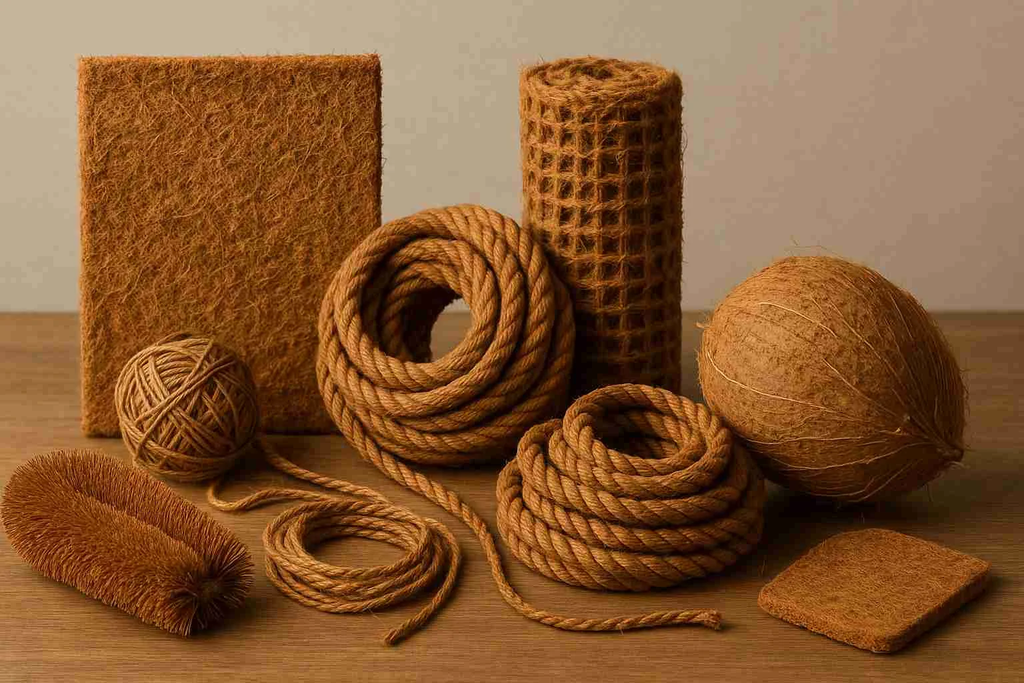
The processing of coconut husks produces different materials, including long fibers, short fibers, coco peat, and coco chips. Each material has distinct characteristics that make it suitable for specific purposes. Long fibers are commonly used in ropes, mats, brushes, and erosion control products, while finer materials are often incorporated into growing media and agricultural applications.
Indonesia is an important source of coconut-based raw materials because of its established coconut industry. With suitable processing and quality control, these materials can serve both domestic and international markets.
Different Types of Coconut Fiber Products
Coconut fiber products are available in several forms, depending on the intended application and manufacturing process. Understanding these varieties helps buyers identify materials that meet their operational requirements.
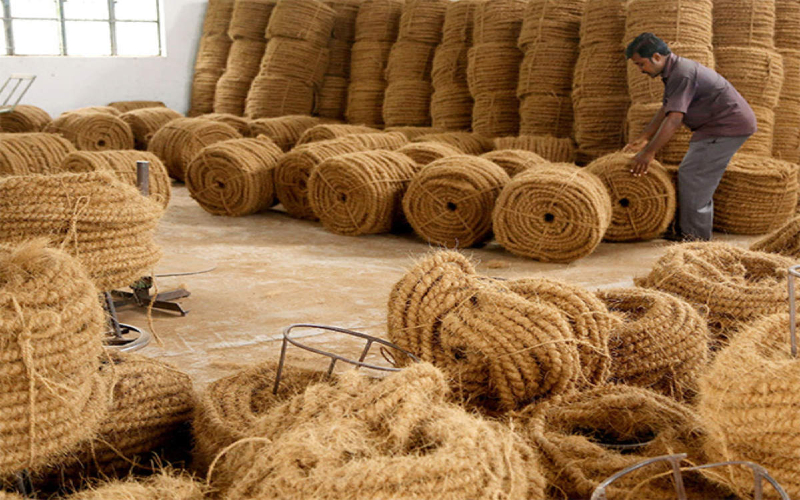
Coconut coir fiber is commonly used to manufacture ropes, mats, brushes, and household accessories. Its natural texture and durability make it useful for products that require a relatively firm fibrous structure. Depending on the processing method, fibers can be sorted by length, thickness, cleanliness, and other physical characteristics.
Coco peat is another important material derived from coconut husks. It consists primarily of fine particles and pith that remain after fiber extraction. Because it retains moisture and provides a lightweight growing medium, coco peat is widely used in nurseries, greenhouses, hydroponic systems, and container gardening.
Coco chips are larger pieces of coconut husk that can improve drainage and aeration in growing media. They are frequently used for plants that require a coarser substrate, including certain orchids and ornamental crops.
Coconut fiber can also be processed into erosion control blankets, coir logs, and protective mesh materials. These products are used in landscaping and soil stabilization projects where natural fibers can help protect exposed surfaces while vegetation develops.
Understanding Coco Mesh and Its Applications
Coco mesh is a net-like material made from coconut coir fibers. It is commonly used in landscaping, gardening, erosion control, and selected agricultural applications. Its open structure allows water to pass through while helping hold soil and other surface materials in place.
One important application of coco mesh is erosion control. When installed over exposed soil, the mesh can reduce the movement of soil particles caused by rainfall and surface runoff. It may also help create a more stable environment for grass, plants, and other vegetation to establish themselves.
Coco mesh is also useful for landscaping projects on slopes, embankments, and areas where soil protection is required. As a natural fiber product, it can gradually decompose under suitable environmental conditions. The rate of decomposition depends on the fiber characteristics, environmental conditions, and product treatment.
The performance of coco mesh depends on its construction and specifications. Buyers should consider mesh opening size, fiber thickness, weight, roll dimensions, and expected service life. These factors help determine whether a particular product is appropriate for a specific project.
For commercial applications, selecting a suitable mesh specification is important because different sites may experience different rainfall levels, slopes, and soil conditions.
Coco Mesh Coco Peat Price: What Determines the Cost?
The coco mesh coco peat price can vary considerably depending on the product type, quality, specifications, order quantity, and delivery destination. Coco mesh and coco peat are different materials, so their prices should be evaluated separately rather than treated as a single product category.
For coco mesh, the price is influenced by fiber quality, mesh density, thickness, roll dimensions, and manufacturing methods. Heavier mesh with tighter construction may require more raw material and processing than lighter products. Custom dimensions and project-specific specifications can also affect the final quotation.
For coco peat, important pricing factors include particle size, moisture content, salinity, processing quality, compression level, and packaging. Washed and carefully graded coco peat may cost more than less-processed material because additional processing and quality control are required.
Order volume is another important consideration. Wholesale buyers may receive different pricing from customers purchasing smaller quantities. However, the final cost should also account for packaging, transportation, handling, and any additional requirements associated with international shipping.
The destination country can significantly influence the total purchase cost. Freight charges, customs procedures, import regulations, and delivery arrangements should be considered when comparing quotations from different suppliers.
Because specifications and market conditions vary, buyers should request current quotations based on their exact requirements. Comparing products with equivalent dimensions, quality standards, and packaging is the most effective way to evaluate pricing accurately.
Benefits of Using Natural Coco Mesh
Coco mesh offers several practical advantages for landscaping and environmental management. Its natural fiber construction provides a useful combination of flexibility and surface coverage, making it suitable for projects that require temporary soil protection.
One major benefit is its ability to help control erosion. When properly installed, the mesh reduces the direct impact of rainfall on exposed soil and helps limit the movement of loose particles. This can support soil stabilization while vegetation becomes established.
Another advantage is its permeability. The open mesh structure allows water to move through the material instead of creating a completely impermeable surface. This characteristic can support the movement of water and help maintain contact between the soil and surrounding environment.
Coco mesh is also relatively easy to transport and install when supplied in suitable rolls. Contractors can select dimensions and specifications according to project requirements, helping simplify material handling on construction and landscaping sites.
Its natural composition may also be advantageous in projects that prioritize biodegradable materials. Nevertheless, the actual service life and environmental performance depend on the product’s construction, installation conditions, and exposure to weather.
The Role of Coco Peat in Modern Agriculture
Coco peat is widely used in modern horticulture because it provides an alternative growing medium for many types of plants. Its moisture-retention properties make it particularly useful in container cultivation, seedling production, and greenhouse farming.
When properly processed, coco peat can hold water while maintaining a structure that supports root development. Growers can use it alone for suitable crops or combine it with other growing media to adjust drainage and aeration.
Compressed coco peat blocks are popular in commercial markets because they reduce storage and shipping volume. After hydration, the compressed material expands and can be prepared for cultivation. Smaller bricks and loose coco peat are also available for different customer requirements.
Quality remains an essential consideration. Buyers should evaluate electrical conductivity, pH, moisture content, particle size, and consistency before selecting coco peat for commercial use. Excessive soluble salts can affect sensitive crops, so appropriate testing and preparation are important.
The best product depends on the crop, irrigation method, growing environment, and cultivation system. By matching the growing medium to these requirements, growers can make more effective use of coco peat in their production processes.
How to Choose a Reliable Coconut Fiber Supplier
Selecting a reliable supplier is important for businesses that depend on consistent raw materials. Product quality, production capacity, communication, and delivery arrangements can all influence purchasing decisions.
Buyers should begin by identifying the specifications required for their applications. For coco mesh, this may include roll width, roll length, weight, mesh dimensions, and fiber characteristics. For coco peat, requirements may include compression format, moisture content, salinity, pH, and packaging.
Requesting product samples can help buyers assess whether the material meets their expectations before placing a large order. Technical specifications and available quality documentation can provide additional information about consistency and suitability.
Export experience is also worth considering when purchasing from overseas suppliers. Clear communication about minimum order quantities, production schedules, packaging, shipping terms, and documentation can help prevent misunderstandings.
Price should be evaluated alongside quality and service. A low initial quotation may not represent the best overall value if the material requires additional processing or does not meet the intended application’s requirements.
Building a long-term relationship with a dependable supplier can help businesses maintain more predictable purchasing schedules and consistent product standards.
Coconut Fiber Products in Sustainable Development
The use of coconut-derived materials can contribute to more efficient agricultural resource management. Coconut husks are a renewable source of fibers and pith, and processing them into commercial materials creates value from an agricultural byproduct.
Coconut fibers can be used in products that support gardening, landscaping, erosion control, and manufacturing. Coco peat helps provide growing media for plant cultivation, while coco mesh can support soil protection in selected environmental projects.
These applications offer opportunities to reduce reliance on certain conventional materials. However, the overall environmental benefits depend on responsible sourcing, efficient processing, transportation, and appropriate end-of-life management.
Manufacturers and buyers can support more responsible practices by evaluating material origins, production methods, packaging requirements, and product durability. Such considerations help businesses balance practical performance with environmental objectives.
As interest in natural materials continues to grow, coconut-based products are expected to remain relevant across multiple industries. Careful product selection and reliable supply arrangements can help businesses make the most of these materials.
Conclusion
Coconut fiber materials serve a wide range of purposes, from manufacturing ropes and mats to supporting agriculture and soil protection. Coco mesh is particularly useful for selected erosion control and landscaping applications, while coco peat provides a moisture-retaining growing medium for horticulture.
Understanding product specifications is essential when comparing quality and prices. Factors such as dimensions, processing methods, material consistency, packaging, order quantity, and transportation can influence the final cost of each product.
By requesting detailed quotations and working with dependable suppliers, buyers can identify suitable coconut-based materials for their projects and business needs.
Contact Information
Visi Arlion International PVT LTD
WhatsApp: (+62)812 1233 3590 (Ms. Maria)
Email: sales@arlion.co.id